She may have written messy manuscripts, but Jane Austen was quick to use neat paradoxes in her writing. How does a host tell a guest it may be time to leave, perhaps the way that Mr. Bennett does in “Pride and Prejudice”?
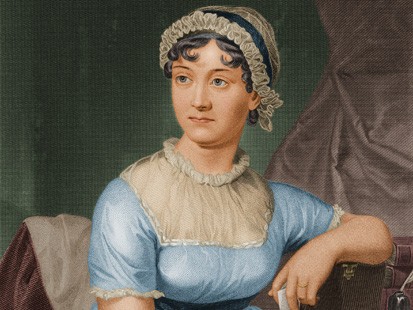 You have delighted us long enough.
In the same vein, here from “Emma”.
It was a delightful visit – perfect in being much too short.
Jane A. liked paradoxes so much she even used them in her correspondence.
I do not want people to be very agreeable, as it saves me the trouble of liking them a great deal.
If you think the use of paradox is relegated to woman authors from two centuries ago, here are two from Catch-22 by Joseph Heller.
The Texan turned out to be good-natured, generous, and likeable. In three days no one could stand him.
Even among men lacking all distinction he inevitably stood out as a man lacking all distinction more than the rest, and people who met him were always impressed by how unimpressive he was.
William Shakespeare in his play Henry VI had a paradox similar to those of Jane A.
Unbidden guests are often welcomest when they are gone.
In my previous blog entry, I quoted an impressive if rather rude crude paradox from Samuel Beckett
Nothing is funnier than unhappiness.
Now switching from the writing business to the cynical movie business, here are some paradoxes from movie-making.
The whole essence of learning lines is to forget them so you can make them sound like you thought of them that instant.
Glenda Jackson
We pay him too much, but he’s worth it.
– Samuel Goldwyn
I wasn’t naked, I simply didn’t have any clothes on.
– Josephine Baker
When people tell you how young you look, they are telling you how old you are.
– Cary Grant.
Now we will wind up with some oxymoronic advice you are welcome to take.
Never speak ill of yourself. You can count on your friends for that!
– Charles-Maurice de Talleyrand
Never let your sense of morals get in the way of doing what’s right.
– Isaac Asimov
Never take anybody’s advice.
– George Bernard Shaw
If a person begins by telling you,
“Do not be offended at what I am going to say,”
Prepare yourself for something
That she knows will certainly offend you.
- Eliza Leslie
Last, but not least, avoid clichés like the plague.
– Anonymous
Most of these oxymorons or paradoxes and many, many more are in the book, “Oxymoronica” by Mardy Grothe.
 Tony's Book World
Posted by whisperinggums on October 28, 2010 at 5:16 AM
Love these, particularly Jane Austen’s of course.
You might have seen the one in my recent post from Mitchell’s Jacob de Zoet: “The creeds of Enomoto’s order shine darkness on all things.” More serious than some of yours above, but I like it nonetheless.
LikeLike
Posted by anokatony on October 28, 2010 at 12:48 PM
Hi Whispering Gums,
Yes, they ‘shine darkness on all things’. Some moonlit nights are like that, where the moon shines darkness on everything. I cannot get out of my mind Mr Bennett’s line, “You have delighted us long enough’.
LikeLike
Posted by whisperinggums on November 11, 2010 at 11:57 AM
Yes, that one of Mr Bennet’s gets you every time doesn’t it…
LikeLike
Posted by Liza Wesner on November 30, 2010 at 7:18 AM
Glad I detected this on google .
LikeLike
Posted by hp mini 210 review on August 28, 2011 at 2:59 AM
I have been reading out some of your posts and i can state nice stuff. I will surely bookmark your site.
LikeLike
Posted by antoniojj56 on October 2, 2012 at 12:34 PM
Your writing skills are obviously very good. My favorite thing about your article is that you have made this so clear and unique. This is interesting information and intelligent content.
LikeLike