Archive for February, 2010

Some Nearly Forgotten 1960s Novels that are Exceptionally Good

Here are some novels written in the 1960s that are nearly forgotten now, but are exceptionally good.
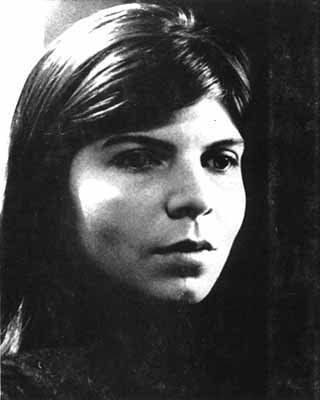
Margaret Drabble (1965)

‘The Millstone’ by Margaret Drabble (1965) –  A long time ago, before ‘Possession’, Margaret Drabble was a famous fiction writer, while her sister A. S. Byatt wrote in near obscurity.  Drabble was one of the first woman writers whose work I followed closely.  The precocious Drabble wrote several novels while still in her twenties, all very popular.  If you wanted to know what the twenty-somethings were doing in London, you read Margaret Drabble. I didn’t start reading Drabble until the late seventies, but was soon addicted.  This novel was turned into a Sixties movie, ‘A Touch of Love’.

‘Friday’ by Michel Tournier (1967) – This novel is a re-telling of the Robinson Crusoe story but instead of Crusoe and culture triumphing over nature, here Crusoe reverts to savagery and is only saved by the primitive Friday, all told in the indescribable Tournier style.  I’ve read nearly everything that this French writer has written.  This short book is a good place to start with Michel Tournier, one of the best fiction writers of the twentieth century.  Here is a quote from Tournier.

    Everything is a sign. But we need a light or a loud shout to pierce our myopia or our deafness.

‘In a Summer Season’ by Elizabeth Taylor (1961) – Elizabeth Taylor is probably the most under-rated author who ever lived.  Her novels and stories are spectacular.  I’ve read them all.  Perhaps the problem is that she shared a name with a popular actress.  She is finally getting some of the recognition she deserves, since two of her novels have been made into movies during the last five years (‘Mrs Palfrey at the Claremont.’ and ‘The Real Life of Angel Devereaux’)   Here are two quotes from the author Elizabeth Taylor.

    Importance isn’t important – Good writing is.

    The whole point is that writing has a pattern and life hasn’t. Life is so untidy. Art is so short and life so long. It is not possible to have perfection in life but it is possible to have perfection in a novel.

‘Last Exit to Brooklyn’ by Hubert Selby, Jr. (1964)  a novel about the bleak and brutal life on the back streets and projects of New York.    This book was prosecuted for obscenity in Great Britain and was banned in Italy.   The book is also a novel of immense power and raw poetry.   Selby was a heroin addict.  Selby was also called ‘probably one of the six best novelists writing in the English language’ (Financial Times)
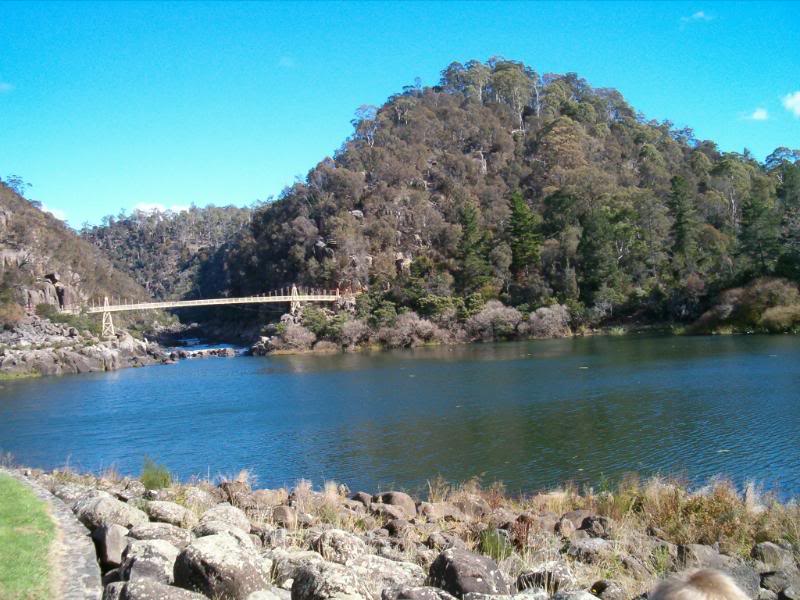

‘Gould’s Book of Fish’ by Richard Flanagan

‘Gould’s Book of Fish’ by Richard Flanagan (2001)     A Novel in 12 Fish

‘Gould’s Book of Fish’ is a novel about those convicts who were transported to Tasmania (then called Van Diemen’s Land) by the British government in the early 1800’s, those in charge of the prisons, and those aborigines who lived there. Over the course of 60 years, more than 165,000 prisoners were transported to Australia.

This book has a unique arrangement where each chapter is a fish painted by convict William Buelow Gould.  These fish/chapters are called ‘Kelpy’, ‘the sawtooth shark’, ‘the striped cowfish’, etc.

In the first chapter, there is a very humorous modern story about some Tasmanians preparing fake antique Shaker furniture to sell to the rich fat American tourists.  After this story, I settled in for a humorous ride, little realizing where I would be taken.  Many of the scenes in this novel are laugh riots, often resulting from the vicious idiocy of the overseers back in England and the flat-out insanity of the prison authorities on Van Diemen’s Land.   But humor is not Flanagan’s ultimate destination in this book.

One of the early chapters is devoted to the torture devices used on the convicts.  These devices are ingenious in their cruelty.  The elaborate descriptions of these made-up devices show the lengths to which the prison authorities would go to inflict pain on their convicts.

In one scene in the novel, the scientists back in England want some fresh specimens of skulls of the aborigines and request them of the prison authorities on Van Diemen’s Land.  The prison authorities order the convicts to get the skulls, so the convicts go out and murder and behead thirty six aborigines, ‘blackfellas’ as Gould calls them.  Then the prison Commandant boils the skulls in preparation for shipping them back to England.  Insufferable politically correct prig that I am, I failed to see the humor in these beheadings or the chopping off of arms and legs or the other acts of humiliation done to the aborigines that are portrayed in this novel. These acts were probably done in real life all too frequently.  It’s one thing to fool rich fat American tourists by selling them fake Shaker furniture.  It’s a completely different horrific thing to chop somebody’s arm or head off.

I began to feel very uneasy about this novel.  This novel was not turning out to be the rollicking, good time boisterous picaresque Australian novel it originally seemed to be.  Who can laugh at the matter-of-fact beheading of aborigines for the sake of  a scientific study in England?   At this point I was planning to write a review pretty much berating Flanagan for his callousness.

Only at about page 300 did I find out Richard Flanagan’s true purpose with this novel.  This is when Gould discovers that the prison authorities have been keeping a sanitized version of everything that has been going on in the prison.  This sanitized version of events contains none of the severe torture of the prisoners and none of the beheadings, chopping off of arms, legs, and heads, or other degradations the aborigines were subjected to.  In other words, the official history of the prison on Sarah Island was a complete book of lies.

So despite its appearance, ‘Gould’s Book of Fish’ is not a hilarious rollicking jaunt through Australian history.  It is deadly serious about the desperate, despicable attempts by those in charge to cover up and hide what really happened.  If these books of lies become a part of the culture, it is as though the past did not happen and the people who were there never existed.

Flanagan makes no concessions to the readers of this novel.  Even though Gould is one of the convicts transported to Van Diemen’s Land, his writing is in very long and complicated sentences.  The novel is supposed to be written by Gould back in the early 1800’s and in those days sentences were longer.  At that time, writers wrote longer sentences connecting two or more thoughts together with the symbol ‘ & ‘.  This can be difficult for modern readers.  More than a few times I became impatient with the over-written, over-stuffed sentences in this book. Also, as I’ve indicated before, I was completely fooled as to the true nature of this novel for nearly 300 pages.  By framing the book as a humorous picaresque story, I think it was Flanagan’s intent to make the readers uneasy and uncomfortable with what happens, especially to the aborigines.

In preparation for writing this post, I googled Richard Flanagan on the net.  He has taken some courageous stands in Tasmania.

“Wolf Hall” or “The English Actors’ Full Employment Act” ?

‘Wolf Hall’ by Hilary Mantel

‘Wolf Hall’ is a slice of life, or I should say a full loaf of Tudor life, seen entirely through the eyes of advisor to King Henry VIII, Thomas Cromwell.  It’s all there in the novel, the food, the frocks, the Papal dispensations, the plumbing, the trivial and the even more trivial.  Also there are many, many characters in the novel, perhaps as many as actually lived in Tudor times, all roles to be filled for the movie which should start filming any day now.  The Tudor people are religious, superstitious, and all too prone to gossip.  King Henry is rampant, most of the men are rampant, and most of the women are accommodating.  In other words, Tudor life is just like modern times.

    “Nothing is running, except the cooks’ noses.”

I’m not sure what type of research Hilary Mantel did to determine that the cooks’ noses were running during this particular dinner, but I’m sure it was extensive.  I’ve read another novel by Hilary Mantel, ‘Beyond Black’ which was very good.  It’s too bad that now Mantel will be consigned to writing historical works about fools, royal and otherwise.  But at least it should be lucrative.   In ‘Wolf Hall’, nearly everyone comes off as a fool except, surprise, Thomas Cromwell and his family.  Thomas Cromwell comes off as an enterprising, thoughtful, and above all steady Englishman.  The audiodisk narrator pronounces the word  ‘What’ to rhyme with ‘Ought’ nauseatingly often, but that may be the fault of the audiodisk rather than the novel.   The audiodisk guy also has the worst French accent ever.

The eighteen ‘Wolf Hall’ audiodisks have that one characteristic which is the  bane of audiodisks, no clear indication when each disk ends.  Thus by the time I reached the end of a disk, I would have forgotten whatever tidbit of gossip about Anne Boleyn or her sister Mary Boleyn or whatever fine point of papal doctrine by Cardinal Wolsey or Thomas More that began the disk, and I would listen to the whole disk all over again.  One time, I listened to a disk three times before I realized I had heard it all before.

Everything is in this novel including the kitchen sink.  ‘Wolf Hall’ is the kind of historical fiction where the reader is supposed to get lost in the richness of the details of Tudor life.  However, I would have preferred a little focus, some unifying point to the whole thing.  King Henry may have had some fine rugs on the floor, but I really don’t need details about the weave.  I didn’t want to get lost, I wanted to find something, a point or something, that wasn’t there.

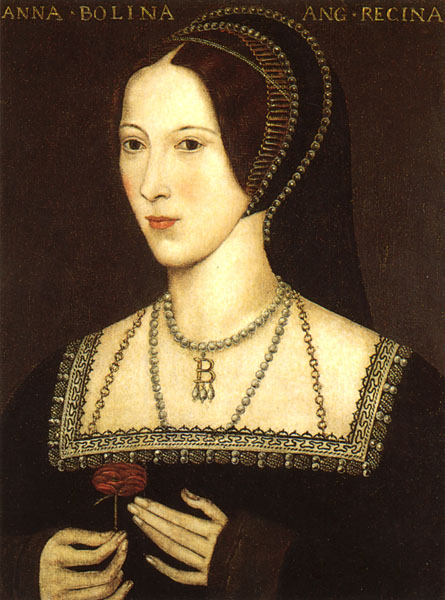
Late Elizabethan portrait of Anne Boleyn, possibly derived from a lost original of 1533–36

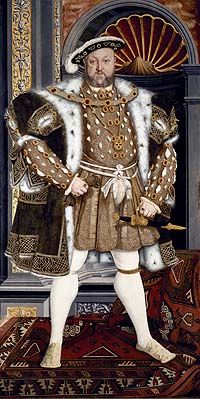
I don’t know who the film makers will pick to play Thomas Cromwell or Anne Boleyn, but only one actor today could do justice to King Henry VIII – Russell Crowe.  It took Henry seven years of complex negotiations to divorce his wife of twenty years, Katherine, and marry Anne Boleyn.  After that, Henry found a much more expedient method to change wives – beheading.  Soon after the timeframe of ‘Wolf Hall’ ends, both Thomas Cromwell and Anne Boleyn were beheaded.  Of course Anne Boleyn’s baby daughter grew up to become Queen Elizabeth of England where she has been reigning ever since.

Under the Snow in Northern Sweden

‘Under the Snow’ by Kerstin Ekman Translated by Joan Tate

I first heard of writer Kerstin Ekman when her latest book “God’s Mercy’ was selected one of last year’s best by the Internet site Pop Matters. Pop Matters is pretty much my bible when it comes to music, and their description of the book sounded promising. I couldn’t get that novel but did find Ekman’s 1961 novel ‘Under the Snow’. Only after I already had the book, did I find out that Kerstin Ekman is a crime writer, a writer of murder mysteries. I usually don’t read genre fiction with one exception. That exception is Ruth Rendell aka Barbara Vine whose books are so well-written I don’t consider them genre fiction. By the time that I discovered Kerstin Ekman is a mystery writer, I was interested enough to read the book.

Kerstin Ekman lives in a small village in northern Sweden. The novel ‘Under the Snow’ takes place up there near the Arctic Circle. Many of the people in this far northern area and in the novel are Samis, whom we used to call Laplanders or Lapps which are now considered derogatory terms, so from now on, I will use the term Sami.

‘Under the Snow’ has a unique rhythm that you won’t find in other books. The rhythm slows you down and has a definite small town charm all its own. The crime solvers here are a humorous pair, a by-the-book policeman whose regular police job is north of the Arctic Circle and a let’s say eccentric friend of the murder victim, David Malm. There is a lot of humor about drinking coffee, and I know from experience in small towns in northern Wisconsin during winter that coffee drinking is the center of social activity until night time when the party moves to the small bars.

The Samis are not completely integrated into Swedish society, and their participation in certain mystical rites gives “Under the Snow” a distinctiveness. The ending of the novel takes place in a long-deserted Sami village Poropirtti. I read elsewhere that Kerstin Ekman in her later novels deals with the underlying tensions between the Swedish people and the Samis, but in this novel everyone who lives in this small town gets along fine playing mah-jongg, etc., except for that little thing the murder.

Ekman wrote this book quite early in here career almost fifty years ago, and except for the unique style and the Sami mysticism, the novel is pretty much a standard murder mystery. I think the next time I read an Ekman novel, I’ll read either ‘Blackwater’ or ‘God’s Mercy’, her more recent novels. According to other Internet sources, she has moved somewhat away from genre fiction.

Some Nearly Forgotten 1940s Novels that are Exceptionally Good

As I was looking over the lists of novels I’ve read over the years, I came across these four novels, all written in the 1940s, which I considered excellent when I read them, but have heard little or nothing about the novels or their authors in recent years.

‘Never Come Morning’ by Nelson Algren (1942) – Algren captured the raw underside of Chicago life in this novel about a dirt-poor boxer.  Having read nearly all his works, I am a huge admirer of Nelson Algren’s style; he writes about the hard gritty side of life, but with obvious intelligence and insight. His novels ‘Man with the Golden Arm’ and ‘A Walk on the Wild Side’ are probably better known than this early novel, but this one is excellent.  Perhaps Nelson Algren is best remembered for this quote.

    Never play cards with a man called Doc. Never eat at a place called Mom’s. Never sleep with a woman whose troubles are worse than your own.” From A Walk on the Wild Side

‘The Mountain Lion’ by Jean Stafford (1947) –  A brother and sister coming-of-age novel, this story is a tragedy, yet charming and funny by turns.  Stafford is best known as a short story writer and for her unfortunate short marriage to the brilliant but mentally unstable poet Robert Lowell.  I’ve read nearly all of her work including her short stories and her other major novel “The Catherine Wheel”, and they are all excellent.  Jean Stafford is a writer too good to disappear into obscurity.  Here is a quote from Jean Stafford.

    Irony, I feel, is a very high form of morality.

‘A Burnt Child’ by Stig Dagerman (1947) –  Stig Dagerman was one of the most prominent Swedish writers in the 1940s.  If you like extreme psychological novels, this is the novel for you.  Wikiquote has a whole long page devoted to quotes from ‘A Burnt Child’.  I’ve also read ‘The Games of Night’, a book of short stories, which is also excellent.  Stig Dagerman committed suicide in 1954 at the age of 31.  If you want to learn more about Stig Dagerman, go to the Stig Dagerman Blog.   Here is one quote from this novel.

    I am sufficiently intelligent to be able to differentiate between real falsehood, which is aimed at hurting people, and a wise moderation of so-called truth, whose only object is to simplify life for all concerned.

‘The Bridge On the Drina’ by Ivo Andric (1945)– This novel is probably least likely of the four here to be forgotten because Ivo Andric received the Nobel Prize for literature in 1961, although that may not be a guarantee.   It is the story of some of the people who crossed the bridge during its three and a half centuries of existence.   The bridge is in what is now Serbia, and Andric sees it as the connection between the eastern Ottoman culture and the western Christian culture.   This is historical fiction at its most powerful.   Here is a quote from Ivo Andric.

    If people would know how little brain is ruling the world, they would die of fear.

I would really like to hear from anyone who is familiar with these novels and/or authors. Please leave a comment.

A One-Sided Affair

“Alien Hearts” by Guy de Maupassant Translated by Richard Howard

Guy de Maupassant (1850 – 1893) is one of the classic short story writers.  He has this natural style that seems almost effortless. I’ve read many of his three hundred short stories and am always willing to read more.  His novels “A Woman’s Life”, “Bel-Ami” and “Pierre and Jean”  are excellent also.  So when I saw this attractive new book, “Alien Hearts” by Maupassant, a new translation in the New York Review Books Classics series, I was eager to read it.

“Alien Hearts” is the story of a love affair between a young man about town Andre Mariolle  and Madame Michele de Burne, the hostess to the most elite artistic salon in Paris.  The most acclaimed musicians, artists, and writers attend Madame de Burne’s salon parties.  Mariolle has no particular talent which is one of the reasons Madame de Burne is attracted to him, because it has been her experience that artists are too self centered.

Their relationship begins romantically, and Mariolle is ready to settle in for a long love affair.  However Madame de Burne is not nearly as committed to the affair, and soon she starts making excuses to arrive late for their assignations, leave early, or not show up at all.   Soon it becomes apparent to Mariolle that she is more interested in her conquests at the salon than she is in their love affair.

The entire novel is written from Mariolle’s point of view.  Many pages are devoted to his thoughts on the affair, his feelings of being slighted by Madame de Burne, his jealousy.  His thoughts about his own love affair become self-centered and repetitive.  His annoyance with Madame de Burne becomes annoying.  The reader soon realizes he loves her more than she loves him.   Yet the affair drags on for another hundred pages.

Madame de Burne finally breaks up with him, and after some serious pining, Mariolle takes up with an eager quite young woman who worships him.

As you must realize by now, I’m less than enthusiastic about “Alien Hearts”.  My experience has been that when I dig deep into even the greatest writers’ body of work, sooner or later I come upon a work that just does not live up to their best.  I would recommend with Maupassant, read the short stories first, then read the excellent short novels “A Woman’s Life”, “Bel-Ami” and “Pierre and Jean”.  Only after you have read these and you are still hungry for more Maupassant like I was, read this novel.   Who knows, you may like it.

Krik? Krak!

“Krik? Krak!”  by Edwidge Danticat

    Krik? Krak!  Somewhere by the seacoast I feel a breath of warm sea air and hear the laughter of children.  An old granny smokes her pipe, surrounded by the village children…  “We tell the stories so that the young ones will know what came before them.  They ask Krik?  We say Krak!  Our stories are kept in our hearts.”

Sal Scalora, White Darkness / Black Dreamings, Haiti: Feeding the Spirit

I like to read a wide variety of world fiction, and one of the ways I do this is to frequently choose as my next book a book that is completely different from the last one I read.  For example, if I have just read the much-hyped book by the new young hot-shot United States writer, my next book will probably be a classic novel at least 200 years old from another country.  If I notice that several of my recent books have been by men, I will make a special point of looking for a book by a woman, and vice-versa.  If I’ve just completed a 700-page novel, I’ll usually take a break with a book of short stories.

I recently finished “To the Lighthouse” by Virginia Woolf, so I was faced with what to read next.  I came up with “Krik! Krak!”, a book of short stories by Haitian writer Edwidge Danticat. Both Virginia Woolf and Edwidge Danticat are woman writers, but on the face of it, it would seem difficult to come up with two more different writers than these two.  Virginia Woolf was a member of the Bloomsbury Group, the collective of intellectuals, writers, and artists in London in the 1920s and 1930s.  Woolf herself came from a family of acclaimed intellectuals.

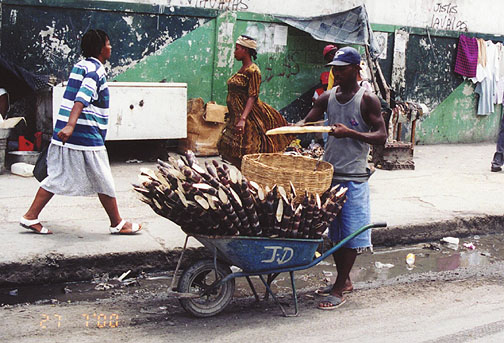
Edwidge Danticat was born in Port au Prince, Haiti in 1969.  According to Wikipedia, Haiti is the poorest place in the western hemisphere, and that was before the recent earthquake.   Both her parents emigrated to New York when she was very young, leaving her to be brought up by an aunt and uncle.

But one thing that Woolf and Danticat have in common was a strong vocation to write.  Danticat started writing at age 12 and published her first story at age 14.

Another quality that Woolf and Danticat share is a profound understanding of the importance of mothers within their families.  In Woolf’s novels, the men are so busy with their academic skirmishes, they have little time for the children.  Thus it is up to the mothers, like Mrs. Ramsay in “To the Lighthouse” to take care of the children.

In Danticat’s stories the men are frequently missing, victims of all-pervasive physical violence in Haitian society.  For example there was the TonTon Cahoute, a private volunteer group of farmers beholden to Haitian dictator ‘Papa Doc’ Duvalier who murdered anyone who expressed disagreement with the government.  At another time Trujillo, the dictator of the adjacent Dominican Republic, issued an order to murder all Haitians living there. Estimates range from 10,000 to 20,000 Haitians were murdered.

Danticat’s stories, in order to accurately depict Haitian society, necessarily contain severe acts of violence.  In one story, TonTon Cohoute members return the decapitated head of a son to his mother.  In another story a woman is murdered trying to make it across the border to escape Trujillo’s soldiers.  Another story is about the Haiti boat people where a huge number of people over-crowd a boat in a desperate attempt to escape Haiti.

But violence is only one side of Danticat’s stories.  One of the stories I liked best is the longest story in the book, ‘Caroline’s Wedding’  In this story a family consisting of Haitian emigre’s living in New York, a mother and two daughters, prepare for the wedding of the younger daughter.  This is the traditional story where the daughters laugh behind their mother’s back about her funny old ideas, only to find out that she knows a lot more than they thought she did.

One can contrast the two societies of Woolf and Danticat, upper class English academic Bloomsbury and modern-day poverty- and violence-ridden Port au Prince.  But Virginia Woolf’s life and her altruistic suicide (she didn’t want her husband to have to go through another round of her severe mental illness) show that even among the upper classes life still isn’t perfect.  At the same time, Danticat’s Port au Prince shows that even under the worst conditions, love and strong values persist.

“Krik? Krak!” was a National Book Award finalist.  It was a fine read, although it probably will not make my end-of-year list.

My Own List of the Best Australian Novels

map_of_australia

In a recent post, Whispering Gums has listed the results of the Australian Book Review’s poll of the favorite Australian novels.  You correctly might ask what right do I have to put together a list of favorite Australian novels?  I’ve never been to Australia, probably won’t get there, can’t even remember meeting in person anyone from Australia.

Somehow Australian fiction has become attractive to me.  The first great Australian novel I read was “The Man Who Loved Children”.  This novel transported me into a world I’d never experienced before.  Since then, quite a few Australian novels have done that for me.

My apologies go to Nicki Gemmell and many other writers whose books I haven’t read yet.  I’ve read and enjoyed several novels by both Peter Carey and Kate Grenville, but their novels are surely much too straightforward for Australian fiction.  If I wanted to read straight ahead stories where point A always leads directly to point B, I would read, god forbid, English novels.  Australian novels are best when they are off the map.

  1. Patrick White –  as a lifetime achievement award, Patrick White gets first place, so that the six novels ‘The Tree of Man’, ‘Riders of the Chariot’, ‘The Solid Mandala’, ‘Voss’, ’The Vivisector’, and ‘The Eye of the Storm’ don’t take up six places on this list.   White was perhaps the best novelist ever.
  2. The Fortunes of Richard Mahony’ by Henry Handel Richardson (Ethel Florence Lindesay Richardson) – This is perhaps the one novel that would rank above any individual novel by Patrick White
  3. “Harp in the South” by Ruth Park – Life in the Sydney slums with the resilient Darcy family.
  4. The Man who Loved Children’ by Christina Stead – This is a satire; the title is ironic.  Randall Jarrell single-handedly reclaimed this novel from obscurity in 1965, and it has taken the acclaimed place it deserves.
  5. Fredy Neptune’ by Les Murray – A raucous novel in verse.  I can’t believe that the Australian Book Review left this book off even their longlist.
  6. ‘Cloudstreet’ by Tim Winton – the exhillarating, wild, funny story of the Pickles and the Lambs.
  7. ‘The Voyage’ by Murray Bail – An Australian piano designer-manufacturer goes to Austria and romance ensues.
  8. ‘The Great World’ by David Malouf –  Malouf has written several excellent novels, so I will pick one of the more Australian of his works.  I’m looking forward to reading ‘Ransom’.
  9. ‘Tirra Lirra by the River’ by Jessica Anderson –  a humorous story of a woman escaping her marriage by going to London
  10. ‘Three Dollars’ by Elliot Perlman –  The Australian Book Review did not mention this novel in their longlist, but they did mention ‘Seven Types of Ambiguity’.  I must read that book soon, the Perlman novel not the William Empson classic work of literary criticism which I also own.
  11. ‘The Spare Room’ by Helen Garner –   How can someone laugh during cancer therapy?  Read this novel, and you will understand.
  12. ‘Eucalyptus’ by Murray Bail –  A humorous fairy tale.  Too bad they didn’t make it into a movie, isn’t it, Russell Crowe?
  13. How the Light Gets In’ by M. J. Hyland – Hyland has the clear-headed quirkiness I like in Australian writing.   I hope she doesn’t lose it in London.
  14. “Gould’s Book of Fish” by Richard Flanagan – The entire history of Tasmania through the eyes of a prisoner.
  15. Gilgamesh” by Joan London – An incredible journey from the wilderness of western Australia to the wilderness of Armenia told in a blunt and powerful style.
  16. “The Watch Tower” – Elizabeth Harrower – the story of a really terrible husband, a domestic horror story.